Table of Contents
- 1. Introduction
- 2. Editorial
- 3. THE FUTURE OF THE QUARTERLY
- 4. Personality Quiz
- 5. The Lone Rangers Trip to Plymouth on 14 March
- 6. Still up for adventures at 80 – inspiration from Jane Castellanos
- 7. Contributions from Creative Writing Group
- 8. NHS Community Falls Prevention Programme
- 9. Contribution from the Shakespeare Group
- 10. Our Committee – May 2026
- 11. ABOUT TORBAY u3a
- 12. Join Torbay u3a today!
- 13. Spring Photos from Members
- 14. BLUE ZONES
- 15. Paintings by member of the Art Group
- 16. Digestible Tips by Brian Kenny from the Well-being Group
- 16. Sea Shanties by Barbara Green
- 17. This is the fifth Torbay u3a Quarterly
- 18. Quiz Answers
1. Introduction
The Quarterly showcases the rich diversity of our special interest groups. It pays tribute to our Group Leaders who are the lifeblood of a u3a.
And now for something different. This photo was taken by a member of
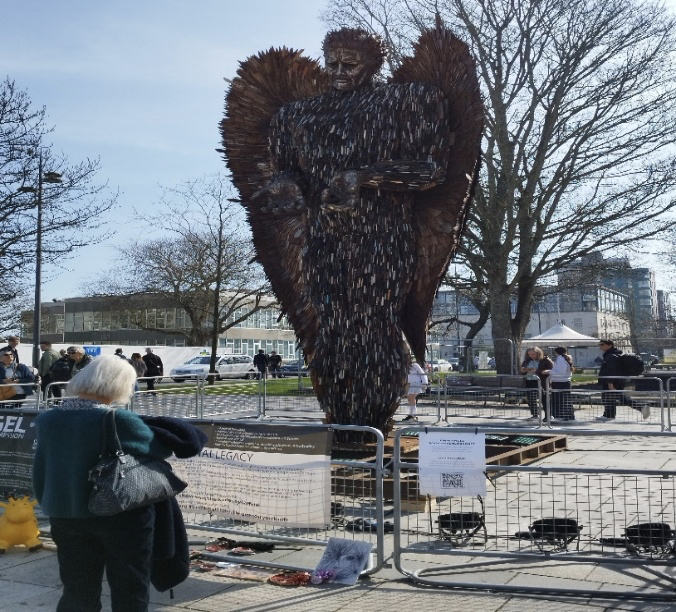
the Lone Rangers Group on a trip to Plymouth. Some of the group went on to find The Knife Angel. The sculpture, made from over 100,000 seized blades, was specifically created to highlight the negative effects of violent behaviour whilst solidifying our critical need for social change.
The content of The Quarterly is provided by individual members and guest contributors. It does not necessarily reflect the views of The Torbay u3a Committee or the Third Age Trust nationally.
2. Editorial
Again, we have a wonderful diversity of items from members and Group Leaders. Thankyou all! The image on the front page is taken by a member of the Lone Rangers while visiting Plymouth – See Gwen Smiths article. We continue with canal adventures by Jane Castellanos – Thanks for sharing this, Jane. This is followed by evocative fiction from Freya Hartley – Creative writing Group. Next, Mandy Wheeler from the NHS Falls Prevention Programme invites you to an Introductory session we’re arranging for September. Please contact Karen Chesterfield, an enthusiastic new Committee member if you’re interested. Email: redmonkey46@gmail.com. Also, slipped in at the last minute, is a timely contribution by the Shakespeare Group. Thankyou, Jean. I look forward to reading regular contributions from the Shakespeare Group So much of the Bard’s writing has relevance today.
We continue with Spring photos. I thank all contributors, and particularly Renate Lallo, for her early and unsolicited contribution. It was a lovely surprise and much appreciated. Next, a big thankyou to George Kowalski for sharing his research on Blue Zones. I suggest there are lessons for our u3a; not only in longevity but in the ‘Quality of Life’, where I believe u3a plays a significant role for members and drives my ‘Chair’ enthusiasm to bring in new members.
Paintings by Brian Hill. What humour, wit and talent come through in your paintings. For me they have a poetic quality. This is followed by Brian Kenny’s Digestible Tips. Thankyou Brian for your varied and valuable contribution to our u3a. I should emphasise here, that all contributions in the Quarterly reflect individual members’ views and what works for them. They should not be taken as authoritative advice and members should always seek professional advice, particularly on medical issues.
And we close with an insightful piece by new Group Coordinator and News Letter Editor, Barbara Green, encouraging us to sing and laugh together. What a great message to end on.
As this will be my last Quarterly as Editor, I thank all members for their contributions and support over the year. I thank Kate Parsons and Glynis Greening for their proof reading and contributions to the quality of the Quarterly. And I thank the amazing Bob Hackwith for pioneering the transformation of my Word document to a Web document that can be read on most platforms (laptop, tablet and mobiles) and where members can read what they want and skip over the rest; and for passing on his knowledge to David Beckett-Smith who will continue this task.
My successor as Editor, my partner and inspiration, needs little introduction. Freya Hartley is already known to many of you, and I’m confident she will quickly apply her own unique style, elegance, enthusiasm and imagination to future issues. And I’m confident you will support her in the same way you’ve supported me. Thankyou.
John – Quarterly Editor.
3. THE FUTURE OF THE QUARTERLY
Message from the Freya Hartley
John set this magazine up and has run it for 5 issues now, but his duties as Chair are time consuming so I am taking it over after this issue.
The four annual issues will come out at the end of each season. So the next one will be out on 1st September with a deadline of 31st July for submissions. Followed by issues on the 1st of December, March and June with similar one month ahead deadlines. I will continue John’s excellent practice of asking for local seasonal photos to include. So bear this in mind as we move through the summer!
This is a more spacious platform for your VOICE. Our monthly newsletter gives brief news and group programmes etc. Our Facebook Group is your platform for announcements, instant communications and brief sharings. The Quarterly is a magazine and as such has space for longer pieces and regular features, interviews with members, and more photos.
My aim is that you all look forward to this dropping into your inbox, and that we broadcast it to all the local community facebook groups and media as a publicity tool. And hopefully get funding to print and distribute hard copies to community centres, sports centres, surgeries, shops etc.
If you have ideas and suggestions about the magazine, want to submit something, would like to contribute a regular column, be interviewed, have a personal story to tell, or can help with grant applications, please message me on 07772488082 or email: torbayu3aquarterly@gmail.com.
4. Personality Quiz
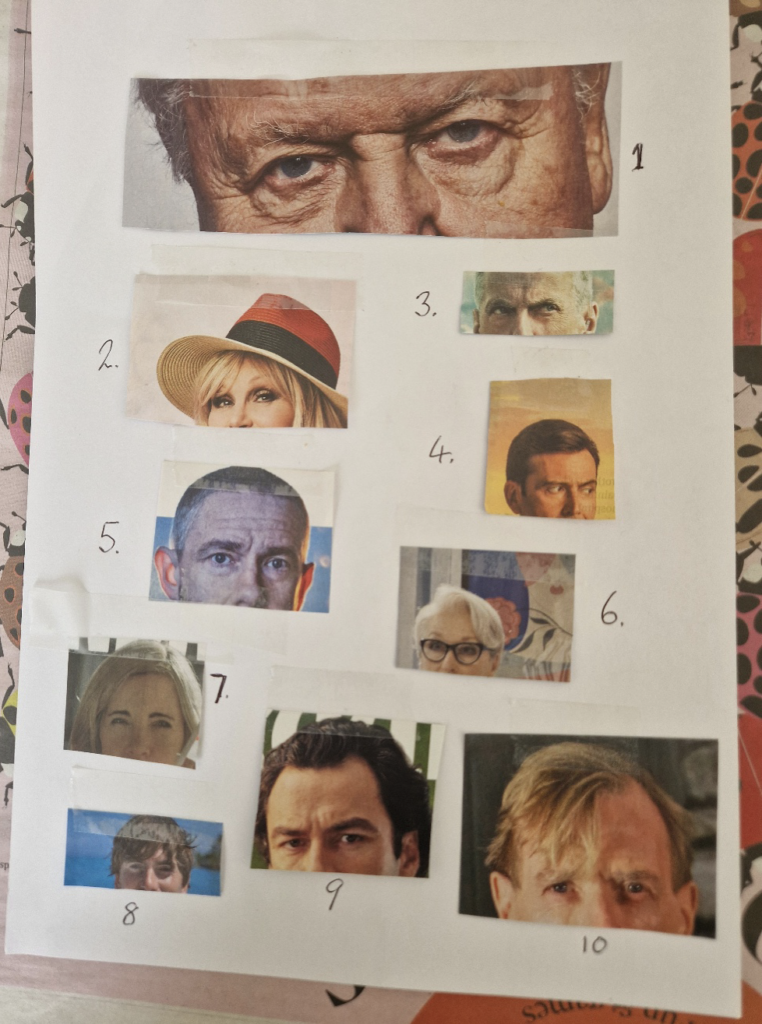
Name the Personalities. Answers on back page.
5. The Lone Rangers Trip to Plymouth on 14 March
The Lone Rangers went to The Box in Plymouth on 14 March. We had an exciting start to our day when the first bus was cancelled and the replacement bus broke down half way there. Still we got there in the end!
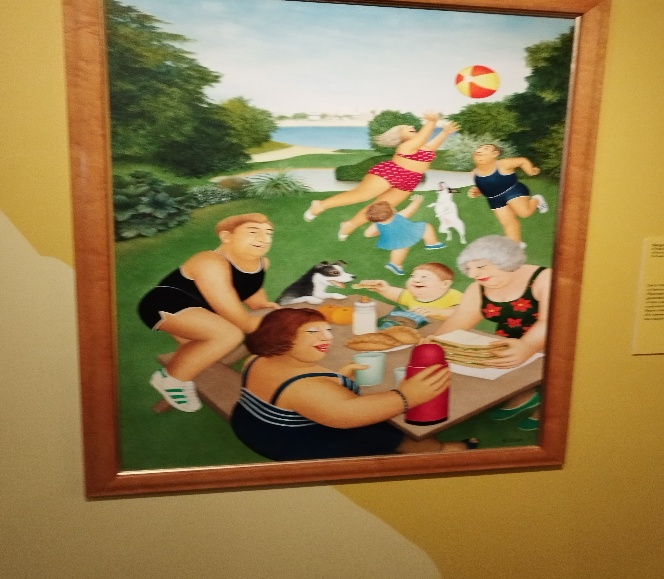
The Beryl Cook exhibition was really good, the paintings were colourful and quite funny; we all enjoyed them.
Some of the group went on to find The Knife Angel – see image on front page. The sculpture, made from over 100,000 seized blades, was specifically created to highlight the negative effects of violent behaviour whilst solidifying our critical need for social change. Not only does the Angel act as a catalyst for turning the tide on violent and aggressive behaviour, but it is also acts as a beautiful memorial designed to celebrate those lives who have been lost through these violent and thoughtless actions. It was interesting to see, to marvel in it’s size, and reflect on the motivations and creativity of the sculptor. Over the coming months, the sculpture will be going on a National Youth Ant-Violence Tour.
The day highlighted the surprises and new experiences to be had on a Lone Rangers’ trip.
Gwen Smith
6. Still up for adventures at 80 – inspiration from Jane Castellanos
To encourage people! We can still camp, even with a dodgy hip and over 80 in April - with lots of quilts, mattress topper and radiator. I can stand in the tent. It has a fluffy carpet and light formed from a propeller.
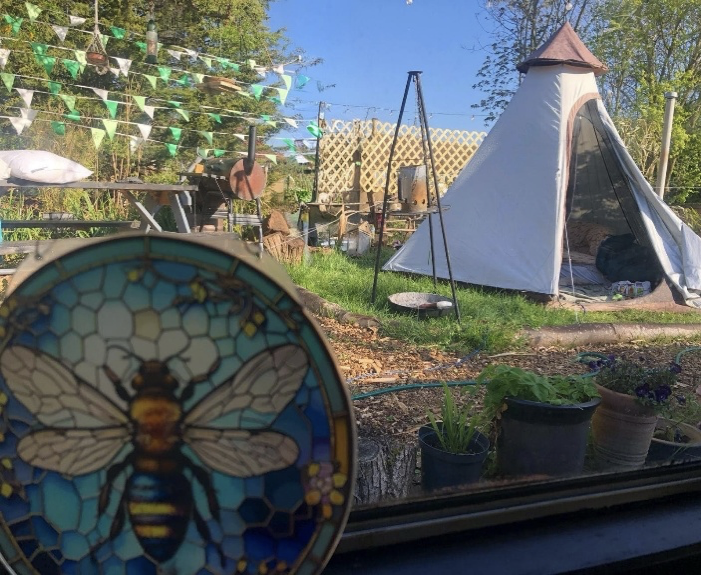

I enjoyed a week camping alongside my daughter’s narrowboat moored at the Grand Union Canal, Southall Wonderful to watch Mr. Coot diving to collect a weed-covered stick four times his length, tugging to free it from entanglement to present proudly to his Missus nest building yards away. The same spot as last year. Graceful swans. Canada geese. Collared doves and blue tits using nesting boxes. Finding a clutch of great tit eggs in the postbox.
Jane Castellanos
7. Contributions from Creative Writing Group
ACROSS THE RIVER
Deep in the mountains of Serbia is a small town straddling a wide and rushing river. The northern half seems to have been blessed, with its gracious houses piled beneath an ancient fortress, while south of the river brutal concrete blocks spread over the flatter land.
On a balcony in one of those stained concrete blocks of flats stands a young girl, leaning on rusty railings. She is gazing across the river. She does this often.
In the evening, the setnja happens on both sides of the river, the evening stroll. The riverbanks come alive with their communities, but in very different ways.
She looks down over the rough embankment below, almost riotous in its many activities to the other side, with its leafy promenade thronged with stylish people strolling slowly, and sitting at elegant bars.
She is consumed by envy, and by bitterness at the injustice. She is a clever girl, shining at school, and rather striking, tall and thin with her long dark hair, strong jaw and nose, and haughty face, but her sour expression diminishes the appeal. Her green eyes hold her envy close.
Across the river another young girl gazes at the opposite bank. A very different girl. She is frail and fair with large grey eyes, and sits alone swaddled in expensive clothes at a tall window in a wheelchair. She watches the colourful, boisterous doings over the river. She too is consumed by envy.
Every day they gaze, or take part in the very diffferent strolls with one eye across the river. Tamara tags along sullenly with her large family as they walk and laugh with their neighbours, and drink and sing raucously in the bars. Maria is wheeled along the promenade by her carer, sometimes joined by her parents dressed in their best. They speak politely with acquaintances, and move quietly on. Maria is expected to be quiet and polite too.
One day, on an important birthday, Maria is surprised by the gift of an electric wheelchair.
‘so you can be more independent now you are 16’. She practices avidly. And one evening when her parents have gone out and her carer is dozing, Maria manages to put on coat and hat and wheel herself out of the house.
There is an old stone bridge to an island in the river, and another bridge to the other side. Maria makes her way in trepidation and some excitement to the island, and there she sits, watching the activities now not far away. She doesn’t dare stay long but before she leaves she notices another girl approach and sit on a bench watching Maria’s side. They catch each other’s eyes and look away quickly.
Maria continues to venture forth whenever Jelka dozes, which is often. So far she is undetected.
One evening Maria and Tamara are again both on the island and Maria boldly approaches the bench. ‘Dobra vece’ she says tentatively. ‘Ja sam Maria’. And so begins a connection. A tentative conversation. Between the anxious girl in furs and the disdainful girl in hand-me-downs. Each envious of the other but unable to speak of it.
After one of their encounters, Maria is crossing the empty bridge on her way home. Winter is here now and it is almost dark. Suddenly shockingly she feels her bag snatched from her lap and sees a slight hooded figure vanish into the shadows. Tamara hears the scream and runs back to the sobbing girl. They look around but the bridge is empty again. Maria is shaking, ‘Can you walk home with me? Please?’ And so Tamara crosses the river and walks the soft-lit promenade and arrives at the beautiful tall house. But this evening Jelka has woken to find her charge gone and is distraught. She sees the wheelchair approaching and rushes out. Much agitated talk later Tamara is nervously invited in for a hot chocolate.
Tamara steps into the gracious house and looks around greedily but the formal coldness of the very warm house hits her and she is bewildered to feel no sense of a home. Jelka goes to the kitchen and Tamara says ‘Your mother is sweet’, ‘Oh she is not my mother. My mother is very busy. That is Jelka, she looks after me, but she sleeps a lot watching TV and I can slip out sometimes’. Tamara does not know what to say. Maria says wistfully ‘I watch your side of the river, you all seem so happy’. Tamara snorts and laughs. ‘Just try being there. But yes, me too. I watch you all looking so …. so rich and beautiful. I watch and I think ….’ the words burst out of her ‘it just isn’t fair……’. They gaze at each other in sudden understanding. ‘ I would like to try being there though’ says Maria slowly.
Jelka returns with hot chocolate and biscuits. ‘Where?’ she says as she puts down the tray on the elegant table. ‘Across the river ‘ says Maria, looking up hopefully. And some time later it is agreed that Jelka and Maria go for a walk one evening and meet Tamara on the bridge. Tamara will take them along her side of the river a little way. Jelka is nervous but a little excited herself. It must be a secret, they know, and a pact is made.
Next week, when Maria’s parents are away in the country, the trio set off across the river, Jelka clutching her bag in fear. They are both feeling bubbles of excitement rise as the noise grows louder and they smell the smoke and the roasting meats. ‘Can we have some of that ’ asks Maria. ‘ might as well be hung as a sheep….’ says Jelka, laughing a little wildly. She is only too aware she can lose her job.
They buy some pork and sit on rough bench to eat it . It is of course delicious, hot and fatty and salty in its rough bread, and Maria is in ecstasy. She is looking around as greedily as Tamara did in her home. And yes there is a warm sense of community, but the longer and closer she looks at the passing crowds and the overflowing bars the more she sees tiredness, poverty, and sometimes despair and desperation. Men drink in groups outside the gostioni, arguing loudly, and in places fights are breaking out. Women walk more sedately with the children. They hurry past or watch in exhaustion and helplessness. Maria takes in the poverty, the clothes, the shoes, the rubbish, the potholes. None of this could she see from the other side, just as Tamara could not see remote parents and loneliness. cold faces and formality. Yes there is warmth here in abundance, but it is defiant warmth. ‘We stick together as best we can ‘ says Tamara. ‘ but it’s a battle, and the men are not a lot of use.’
They wipe their sticky hands and Jelka hurries them away. ‘we must get back’ she says nervously as more fighting starts not far away,
As they hasten away, out of the smoke appear a group of people ‘oh no,’ mutters Tamara, and turns away, but she has been spotted and as the family approach them there is a strange silence and confusion. No-one knows what to say.
Jelka takes hold of the wheelchair ‘We must be going’. Tamara stops her, ‘ This is my family; she says loudly to Maria, and ‘Maria and Jelka are taking a walk with me’ she tells her bedraggled family, who mutter greetings, and the women try to hold back the belligerent men. The groups part uncomfortably. I’ll be for it, says Tamara, resigned. Will you walk back with us, asks an agitated Jelka .And they go quickly back across the river.
As they approach the house a large black car draws up. ‘ I don’t believe it’ say Maria and Jellka together. A very elegant couple climb out and look at their daughter and her carer and then at the unkempt Tamara whose chin is lifted in arrogance. They look at each other in puzzlement. Tamara stares at them, sees their puzzlement turn to anger, and ‘What is this, Jelka? Who is this consorting with our daughter?’
The girls stare at each other, and reach for each others hands, then drop them hastily. They know this evening is the end of their connection. And so it proves. They never meet again. But they do not forget what they learned when they each crossed the river, and they are no longer consumed by envy..
Seven years later
Tamara is now a feared investigative journalist, she is in her home town on an assignment. She crosses the river all the time, dressed smartly and sharply. She saw beneath the masks of the prosperous and delights in uncovering what lies beneath.
Maria is now a social worker, she can walk now, albeit rather crookedly, and she too crosses the river often to look after and help the afflicted women on the other side.
One day they pass each other, and as they do they stare in surprise but move on.
But then they both turn back and move towards each other. ‘Well’ says this newly confident Maria ‘ They cant keep us apart now can they? Coffee?’
Freya Hartley
8. NHS Community Falls Prevention Programme
Falls are the single biggest cause of accidental injuries in the home and the leading cause of accidental death among people over 65 in the UK. Here in Torbay and South Devon, our population means we could statistically expect more than 10,000 falls every year.
The impact of a fall can be life‑changing. Beyond physical injuries, falls can lead to long‑term health issues, disability, trauma, reduced mobility, loneliness, social isolation, and a loss of independence. They also place a significant strain on health and care services, costing the NHS over £4 billion annually.
But the good news is that many falls are preventable. By helping people understand why falls happen, who is most at risk, and what simple steps can reduce that risk, we can make a real difference in our community.
As the Community Falls Prevention Lead, my role is to support individuals, families, and carers in recognising fall risks and taking practical action to reduce them. I will be joined by our Falls Ambassador, who plays a vital part in raising awareness and sharing lived experience and practical advice across the community.
Mandy Wheeler - Falls Prevention Lead - Community
Torbay and South Devon NHS Foundation Trust
Working with Mandy, Torbay u3a plan an introductory session on Wednesday 25th September. The session will explore:
• Why falls happen
• How you can help prevent falls
• What to do if you or someone you are with has a fall
• Local resources and support available
The session will include tea/coffee and cakes.
Please register your interest in this session by emailing Committee Member, Karen Chesterfield at redmonkey46@gmail.com
Once we have likely numbers, we’ll advise times and location.
9. Contribution from the Shakespeare Group
The Shakespeare group was set up in October 2025 and we now meet on the 1st Wednesday of the month at 1.30pm. The current members already have background knowledge of William Shakespeare and the Age In Which He Lived.
Thus far in order we have studied the Merchant of Venice followed by Richard 11,Henry 1V and latterly Twelfth Night. The intention next is to read and watch a tragedy and after much debate! the decision was Othello.
Our sessions have been underpinned by the texts and by the superb BBC TV stage productions of his plays performed in about 2000 AD. Using subtitles also we discuss each play in the context of Shakespeare's own life and what was happening in England,Scotland and abroad in the approximate year the plays were written.
Recently I asked members to choose a quotation from any of the plays we had studied as perhaps being their favourite. 3 chose
This royal throne of kings, this scepter'd isle,
This earth of majesty, this seat of Mars, This other Eden, demi paradise; ....
John of Gaunt Act 11 Scene 1 from Richard 11
I think this shows only too clearly how u3a members want our media to represent the UK in a more positive way.
Jean E. Neafcy
Editor: Thankyou, Jean. I’m sure your observation is correct. I look forward to reading future thought-provoking contributions.
10. Our Committee – May 2026
(Contact information on the contact page on our website)
Chair - John Hough
Vice Chair - Vacant
Membership Secretary - Karen Daly
Treasurer - Marian Manojlovic
Speaker Finder - Marilyn Ham
Welfare Coordinator - Glynis Greening
Committee Member - Kate Parsons
Groups Coordinator and Newsletter Editor - Barbara Green
Committee Member - Karen Chesterfield
Appointed officers of the committee
Facebook Manager - Abby Beckett-Smith
Website Manager - David Beckett-Smith
The Committee is also looking for members to fill the roles of Committee Secretary, Speaker Finder (2027), Community Liaison Officer, and helpers with refreshments. Please contact the Chair to find out more. It’s an exciting time to join our leadership team!
11. ABOUT TORBAY u3a
Some information about us for any non-members reading this.
The Torbay u3a has over sixty special interest groups run by members for members. Check out our website for details including contact details for the different groups, or visit our public Facebook page
Membership is £16pa, and members can join as many groups as they wish. Most groups are free apart from members sharing venue hire fees when appropriate. Many groups meet in members homes at no cost – an important feature of u3as across the country.
The diversity of groups is huge and we’re always looking for members to initiate and lead new groups. Contact the Chair or the Groups Coordinator if you have an idea for a new group.
New to u3a? You can try out a group (or groups) before deciding to join, or come to one of our monthly ‘speaker meetings’ held on the second Wednesday of the month at the Central Church in Torquay.
Members from other u3as can attend up to two of our group meetings for the nominal fee of £1, but always check with the relevant Group Leader to check availability or ‘last minute’ changes.
12. Join Torbay u3a today!
13. Spring Photos from Members

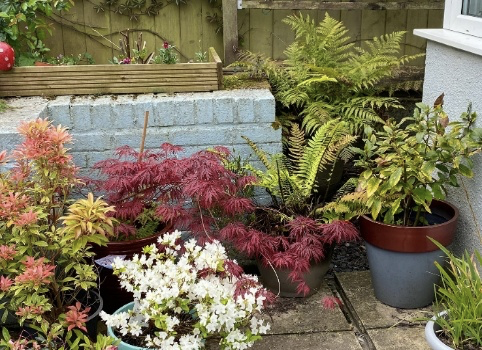
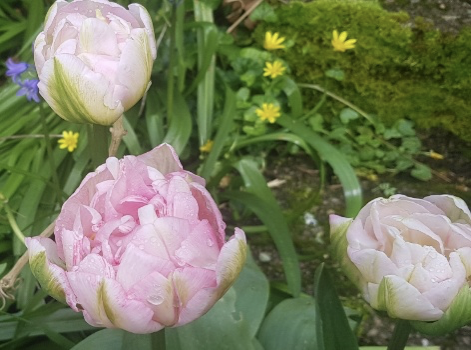
We don’t have a Photography Group, but here are sample of photos taken by members that reflect Spring. This first picture was taken by Renate Lallo on a walking trail in Maine on the Meduxnekaeg River. For Renate it reflected the transition from Winter to Spring. Thankyou.
Spring flowers from members’ gardens – the very essence of Spring
Rhubarb was the first of the fruits. And now he first of the late spring crops – broad beans, and apple blossom representing a nature’s potential harvest in the summer/autumn. And behind the broad beans, the stakes for the runner beans, and active in the dark, new potatoes. I smile with anticipation of the
first new potatoes with a scoop of butter; and in the greenhouse, tomato plants reach for the rising sun. A promise, hope; but with so many uncertainties – depending on the weather. Every year is different.
I reflect on our u3a. Between us we have the land; even a balcony can be the platform for an abundance of tomatoes – with taste! We have the skills. We have the experience. How can we realise the potential that is all around us?
Editor
14. BLUE ZONES
A summary by Freya Hartley of the Talk to The Well-being Group by member George Kowalski
‘Blue Zones’ are defined as areas in the world where a disproportionate number of people live healthily into very old age. They are: Sardinia, Costa Rica, Loma Linda, Ikaria, Okinawa, and the only urban one - Singapore. Clear themes emerge when the lifestyles of these areas are studied.
Sardinia: The hill villages of mountain regions of the east are remote from civilisation and largely self-sufficient. The peasant lifestyle includes a lot of hill walking and a strong family life; they grow their own food, and eat a mostly plant-based diet and a daily glass of red wine. Interestingly they have a great diversity of gut bacteria. They celebrate their elders, making sure they receive several daily visits. Laughter is very important. A genetic component has also been shown. l
Costa Rica: In Nicoya in the Northwest, multigenerational homes are usual, and social networking is very important. People have a ‘plan for life’, a purpose and direction. They focus on preventative medicine, and older people are valued and visited regularly. They do not have large evening meals, eating in the middle of the day, and eat a largely plant-based diet. They also believe in ‘sensible sun’.
Ikaria in the Greek Aegean Sea. The islanders have very low rates of chronic diseases, cancer and dementia. They do a lot of hill walking, eat a mostly plant-based diet, and drink moderate amounts of red wine. They grow their own or forage for food, take afternoon naps, believe in a slow pace of life and have strong family and social connections.
Okinawa is a small island in Japan’s far south. Again, they eat a largely plant-based diet, and importantly sweet potatoes are their staple rather than rice. They grow their own food, and natural movement and moderate sunshine are important. Breath control is an interesting part of the lifestyle, as is having a reason for being, and a strong interest in others.
Loma Linda in the mountains east of LA in California. This is Seventh day Adventist, and they believe in a plant-based diet, natural exercise, social networking, and an emphasis on health with abstinence from alcohol and smoking. Volunteering is expected and an important part of life, as is observing the Sabbath.
Singapore is an intentional Blue Zone, and its healthy lifestyle is government driven.
It is pedestrian friendly, a safe city, promoting bicycling and walking and public transport, supporting family ties, and ensuring that all inhabitants live within 10 mins walk of open space. There is a policy of universal free preventative medicine, with regulation of tobacco and alcohol and taxes on sugar and fat, and provision of centres and care for the elderly. Dignity is valued above charity.
So – a simple and slow but connected and meaningful life. Vegetarianism, growing your own food, natural exercise, social connection, and nature… which is all preventative of disease. We can certainly emulate a lot of that ourselves.
Singapore shows that it is possible to re-create these societies in a contemporary world. But while our governments fail in that regard we can certainly implement many aspects of the way of life of simpler societies ourselves.
15. Paintings by member of the Art Group
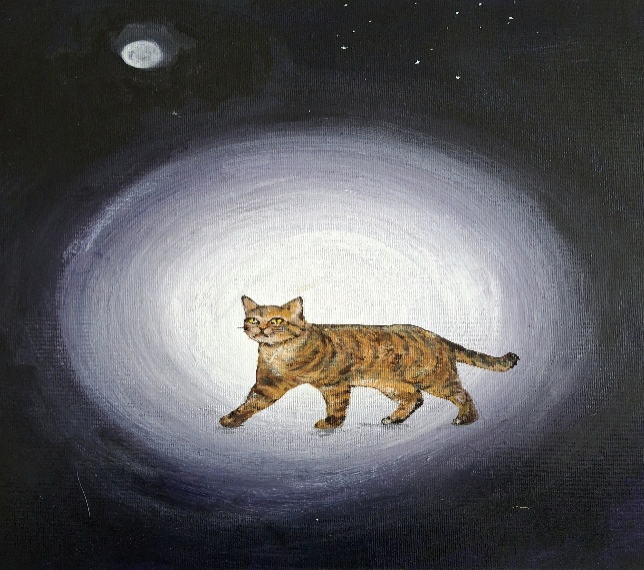
Cat Walk by Bryan Hill
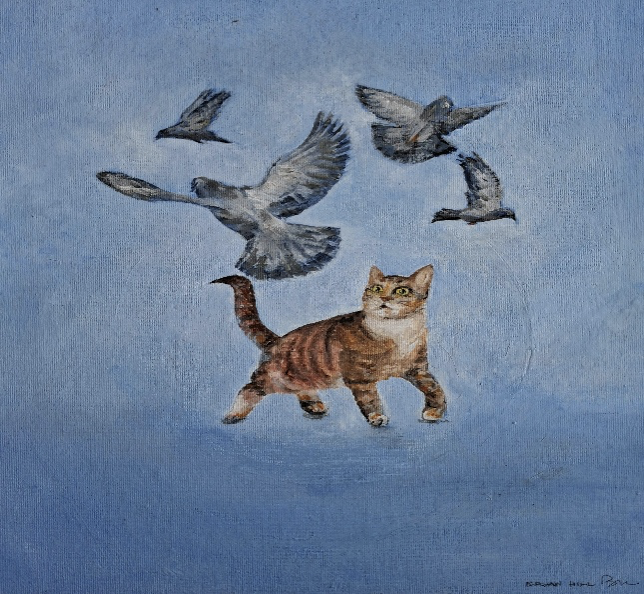
Cat among the pigeons by Bryan Hill
More Paintings can be found on the Arts Group page on our Website (torbay.u3asite.uk)
16. Digestible Tips by Brian Kenny from the Well-being Group
We think of digestion as something that’s out of our hands, a matter of food in and job done, the body will do the rest.
There are, however, simple steps you can take to make the process more efficient and help your body extract more nutrients from your food.
These can be especially useful in later life when our bodies naturally become less efficient at digestion through slower transit, reduced stomach acid and an increased chance of interaction with medications.
Time your fluids
Your digestive system loves water, but don’t overdo it. Sipping liquids during a meal is fine, but avoid large amounts while eating as it will temporarily dilute stomach acid. Drinking a glass of water 30 minutes before a meal and again an hour after can be a useful routine.
Avoid having tea during a meal as the tannin it contains will block the absorption of non-heme iron, the kind we get from plants and most supplements. That’s why it’s generally better to have your tea an hour before or after the meal.
That’s hard for some, especially at breakfast time. Instead, just focus on getting your iron later in the day. You can also help improve the absorption by eating vitamin C-rich foods at the same time.
Have a starter
An overlooked aspect of the Mediterranean diet is the fact that people in those countries begin most meals with a starter, even in the home.
The act of chewing tells your digestive system to get ready for food by producing more saliva and stomach acid.
Try adding a small starter to your meal or nibble on something crunchy like radishes while doing your other food prep in order to wake up your system.
Slow down
Eating too fast can cause a host of problems, from bloating and gas to having your brain not get the ‘I’m full’ signal in time to push the plate aside.
Some of the most important nutrients like iron and calcium are absorbed quite early in the digestion process. Chewing food properly helps ensure your body can use what you’ve eaten.
Think of meals as simple courses (starter, main, dessert) with each being plated only when needed. The starter causes the clock on the ‘full’ signal to begin, and pauses between courses give the hormones that drive the signal a chance to be heard.
Manage stress
It may sound too simple to be true, but your emotional state can impact how well you digest your food. Rather counter intuitive when you consider the impulse to eat - and the very idea of ‘comfort food’ - when we’re under pressure.
When you’re stressed, anxious or rushing, your body shifts into ‘fight or flight mode’. This leads to blood flow being diverted from the digestive system toward your muscles and brain, leaving your digestive tract with less energy than it needs.
Try taking three slow deep breaths before tucking into your meal. This mindful step signals your nervous system to switch from stress mode to ‘rest and digest’ mode.
If possible, create a calm eating environment by muting the phone and avoiding the news. If you do consume ‘content’, try sticking to lighter non-controversial fare, something in short supply these days!
Move after eating
Your stomach breaks down food through a combination of chemical and mechanical means. It uses stomach acid to create a harsh environment, and the wall of the stomach literally churns the food in order that the acid is distributed evenly.
It’s a similar story in the rest of the digestive tract, with food pushed through with the help of gravity and a series of wave-like muscle contractions.
We can help these mechanical processes by engaging in gentle movement after eating. Avoid anything too strenuous as that’s likely to result in cramp and discomfort, but a gentle 10-minute walk - or even some light housework starting with the washing up! - after a meal is a great way to aid digestion, leaving you feeling lighter and less bloated.
Case study
Let’s tie these together to understand how someone, for example, can develop an iron deficiency even though they eat loads of iron-rich foods.
Our subject thinks starters only make sense at the restaurant. They grew up in a big family so have always wolfed their food in competition with their siblings. That’s thirsty and stressful work so they wash down their meal with a pot of tea.
This leaves them with half chewed food sitting in diluted stomach acid that was already behind on its job as it didn’t know food was on its way.
The stomach does what it can but eventually starts releasing its contents into the duodenum, the start of the small intestine and the point where we absorb most of our iron.
The duodenum sees the food hasn’t been broken down enough - and there’s that pesky tea again - so it throws up its hands and says ‘thanks but I’ll just wait for the multivitamin’.
Takeaway
Small adjustments can make a real difference to how you feel after eating, and over time, to how well your body gets the nutrients it needs. Conversely, making small mistakes each day can have have a negative effect on health.
Note that these tips are not to be confused with medical advice! They’ll generally work for most people but won’t be effective in all situations.
For example, take ‘stomach churn’. If your body is taking hours to get through that phase and it’s very uncomfortable, don’t ignore it as it could be a symptom of an underlying medical condition that should be investigated further.
Brian Kenny
Editor: I should emphasise here, that all contributions in the Quarterly reflect individual members views and what works for them. They should not be taken as authoritative advice and members should always seek professional advice, particularly on medical issues.
16. Sea Shanties by Barbara Green
Editor: After all the talk of well-being, what a great way to end – with song and laughter. Thankyou Barbara
Torbay U3A has very recently decided to form a brand new group to learn to sing Shanty songs. We are all very familiar with the Fisherman’s Friends from Port Isaac - if not, where have you been??. Shanty singing has become really popular in the last few years, with groups and solo singers finding this genre of music both accessible and really rewarding. There are Shanty Festivals all over the country - lots in the South West - which allow singers to share and enjoy not only the songs but the experience of singing. Well, we don’t say that we are aiming to be any sort of challenge to Fisherman’s Friends, but we’d like just a little piece of the action!

There are so many types of singing - choral, opera, folk, country - the list is endless. Many people, when you ask if they’d like to sing, will tell you that they can’t sing - perhaps even that they were told NOT to sing when they were at school. Those early memories have stopped people from taking up a pastime that would have given an enormous amount of pleasure. What a waste! OK, we can’t all be Pavarotti, or Julie Andrews, but pretty much everyone can make a noise that is at least bearable!
So, Shanties. Do you imagine that burly sailors passed auditions before they were allowed to sing those rousing songs? Of course not. The singing was essential to keep a regular rhythm while working hard at tasks on board ship, it wasn’t intended as a performance. Maybe when the working day was done the singing continued, different songs, perhaps allowing the men to relax and wind down a bit. I’ve done a little bit of research into Shanty singing, and the range of songs is huge, with many different rhythms to accompany different tasks. I won’t go into detail here - you can look it up as well as I can. The important thing is that the men all participated - they were a team.
I was one of those children who “couldn’t” sing. I loved to hear music but people winced when I tried to sing. Descants during school Carol Services were agony! My sister became involved in setting up a barbershop chorus in Cornwall about 40 years ago and spent the next few years trying to make me join. I refused point blank - I still remembered my excruciating childhood experiences. In the end, just to get some peace, I agreed to go to a rehearsal. I told the director I couldn’t sing and she didn’t bat an eyelid, she just sent me to stand with a separate small group of women. I assumed they were also rejects. Turned out they were basses, singing in a much lower register - and I could do it! Not only could I do it, I was actually quite good. I can’t tell you how wonderful that feeling was. So, thanks to my big sister, I’ve spent the last forty or so years singing with choirs and quartets, all over the country and even in Holland, Ireland and the USA (very briefly!)

I can honestly say my life has been really enriched by all that music. I’m not a fantastic singer, I don’t have the sort of voice to ever sing solo or make the big time. That hasn’t mattered - I’ve been able to join in and successfully play my part with other singers. I even have medals to prove it……..but that’s another story.
Maybe one day in the future you’ll hear our new group sing - maybe you’ll decide to risk having a go. I hope so.
17. This is the fifth Torbay u3a Quarterly
It is intended to share information and ideas from Groups more widely with our u3a members – to promote discussion across our u3a. It can also be a Forum for members to share their ideas with other members. It is vital that you give us feedback. Do you support this initiative? What should be included?
Email The Quarterly ‘torbayu3aquarterly@gmail.com’ putting ‘Letters to the Editor’ in the subject line.
Letters will be published in the next Quarterly – at the discretion of the Quarterly editorial team.
The Quarterly may also be used to promote our u3a across the Torbay community. As such, it would be fantastic, to get letters describing what you get from our u3a. Think of it as giving your u3a a ‘review’.
I am taking over as Editor of The Quarterly for the Summer Edition and look forward to hearing from you via the same email shown above.
Freya Hartley
18. Quiz Answers
1.David Attenborough 2. Joanna Lumley 3. Peter Capaldi 4. David Tennant
5. Martin Freeman 6. Meryl Streep 7. Lucy Worsley 8. Steve Reeves
9. Aidan Turner 10. Timothy Spall